

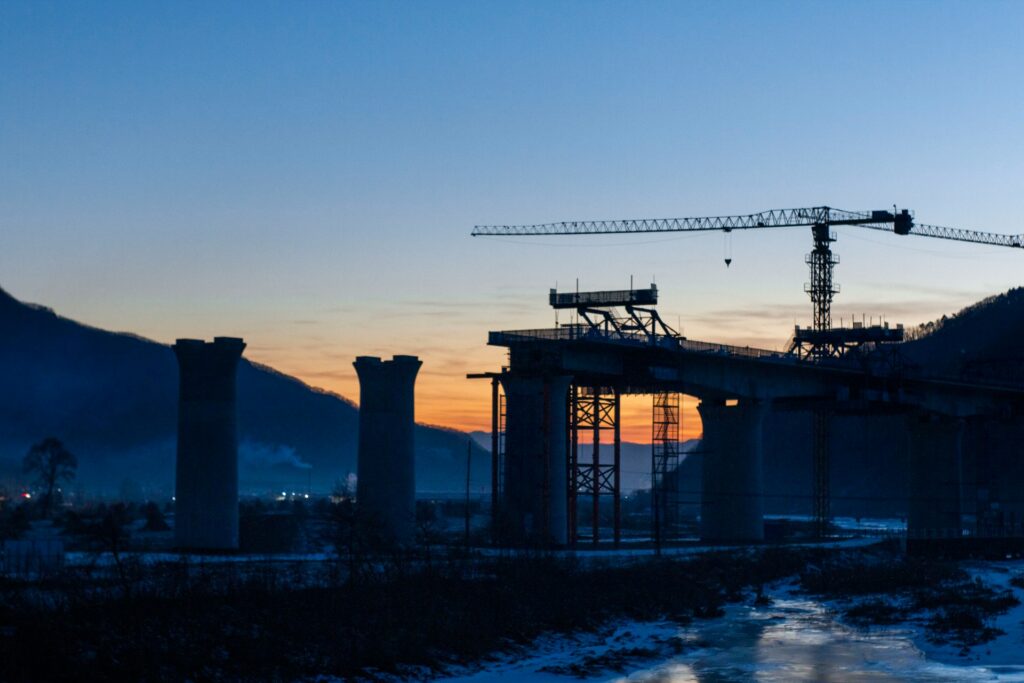
It has been five years since historic funding programs—including the US Infrastructure Investment and Jobs Act (IIJA) and the CHIPS and Science Act—were signed into law. As we look forward to 2026, the capital provided by this batch of legislation is about to reshape a wide swath of American infrastructure, from public works to energy grids.
The infrastructure sector’s greatest challenge remains in recruiting the top talent required to turn these projects into reality. Here at MRINetwork, we’ve been examining the infrastructure hiring trends and how they will impact recruitment in 2026.
Here’s a look at what we’ve found and what we see happening next year in the fields of energy, transportation, and public works.
Transportation and Mobility: Smart, Sustainable, and Connected
In transportation and mobility, connectivity is the dominant trend. IIJA projects, including EV charging infrastructure, smart highways, and intelligent traffic systems, will all require new power and data connections. This also applies to the rail and transit sectors, where automation is an emerging trend.
The infrastructure jobs forecast for this sector is all about the need for engineers skilled in emerging fields like smart mobility, civil and electrical design, and digital integration. Transportation recruiting in 2026 will focus on these specialized skills. Employers will likely have to source cross-industry talent from the tech and energy sectors to meet these unique needs.
Energy and Utilities: Transitioning to Low-Carbon Systems
The various energy workforce 2026 trends all coalesce around one thing: decarbonization. We see this manifest in rapid expansion in solar, wind, grid modernization, and hydrogen projects. To support these initiatives, there will be a surge in energy storage, transmission line resilience, and microgrid deployments.
The impact on the talent market is two-fold. There will be high demand for skilled trades in renewable installation and grid retrofitting, which will compete with a pressing need for power systems engineers, project controls specialists, and sustainability analysts.
Additionally, there’s a new crossover demand for AI expertise in predictive maintenance. For public works leadership, the challenge will be balancing these immediate workforce gaps with the long-term development of clean-energy capabilities.
Water and Wastewater: Resilience Under Pressure
The water sector faces an aging infrastructure that is being stressed by severe climate-related issues, such as droughts and floods. Next year, significant investments in water treatment, pipeline renewal, and advanced stormwater management will take center stage to enhance the resilience of this critical infrastructure.
Therefore, the infrastructure jobs forecast for this area shows high demand for environmental engineers, GIS specialists, and sustainability compliance officers. The recruiting challenge for public works leadership is to attract new generations of talent into these legacy utility sectors when there are AI-related opportunities in other sectors.
Urban Infrastructure and Construction: Building Smarter, Not Bigger
In the urban infrastructure space, building bigger is a thing of the past. Now, building smarter is the order of the day. Accordingly, there is a clear shift toward adaptive reuse, modular construction, and smart city integration.
Development is also heavily focused on blending digital systems (IoT sensors, data dashboards) with traditional construction projects. The infrastructure jobs forecast for construction now includes non-traditional roles, such as BIM specialists, data analysts, and construction managers who are fluent in digital tools.
Digital Infrastructure: The Hidden Backbone of 2026 Growth
Given the emphasis on connectivity, data, and AI, digital infrastructure will provide the foundation for nearly all infrastructure growth in 2026. Broadband, data centers, and 5G/6G networks will be a hidden backbone, the invisible infrastructure that powers all other projects.
To meet these needs, expect to see unique infrastructure hiring trends, including high demand for civil, electrical, and network engineers; program managers with telecom experience; and ESG-compliant site planners.
The Workforce Challenge: Building Talent Pipelines Across Sectors
The infrastructure hiring trends for 2026 show that public works leadership must expand their talent pipelines. This might involve partnering with certification programs, upskilling mid-level managers in digital tools, or recruiting from beyond traditional demographics.
MRINetwork’s cross-sector strength is ideal for this moment. We have the proven ability to connect high-impact talent across technical, operational, and executive levels, from project engineers to infrastructure CFOs. We have the talent pipelines to meet the needs of any infrastructure jobs forecast. To learn more, contact an MRINetwork office today.
Connect with MRINetwork