

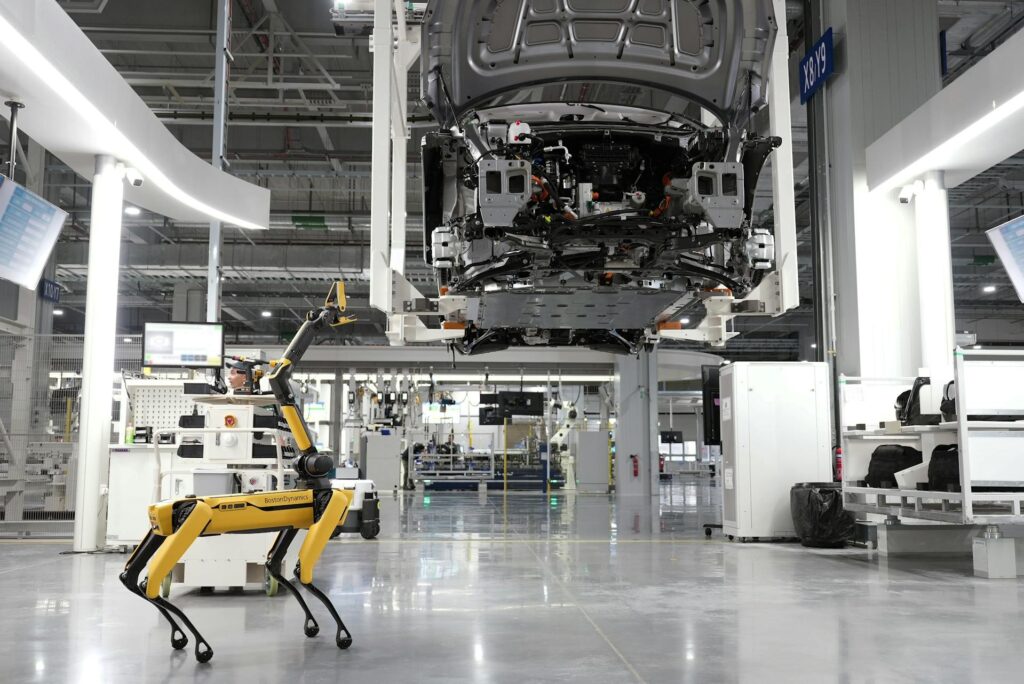
As economists and industry analysts look ahead to the 2026 global economy, one theme continues to dominate the conversation: the global automation arms race. Around the world, manufacturers are accelerating investments in robotics and AI, viewing automation as the key to efficiency, scalability, and sustained competitive advantage.
Here’s a look at the industrial automation trends we’re seeing at MRINetwork, and what it all means for manufacturing leaders, workforces, and the factories of 2026.
Current State of Automation in Manufacturing
As Industry 4.0 becomes the global standard, factory automation is one of the most dominant industrial automation trends. In fact, one study expected industrial automation spending to reach $378 billion by 2030. To take things to the next level, leadership teams are now prioritizing the integration of robotics and AI in manufacturing.
However, companies worldwide realize their technology investment is only as effective as the smart factory workforce they build to manage it. This push for higher productivity and cutting-edge precision is therefore creating an unprecedented demand for automation talent.
Technological Innovations Shaping the Future
The top industrial automation trends also revolve around AI and machine learning. Manufacturing leaders are banking on technologies that make their factories smarter through improved quality control and predictive maintenance algorithms.
While this represents many significant capital investments, manufacturing leaders see it as necessary. In 2026, enterprises adopting AI engineering practices are expected to outperform their peers with operational models by at least 25%
Industrial Internet of Things (IIoT) devices continue to act as the factory’s nervous system. IIoT collects that real-time data that empowers a smart factory workforce. While on the robotics front, cobots (collaborative robots) increasingly work alongside humans and autonomous mobile robots (AMRs) to handle materials.
Implications for Leadership
While companies of all types and sizes are competing in the automation arms race, those that are winning share one thing in common: their leaders have a deep commitment to transforming their organizations.
One study revealed that 82% of manufacturing executives view AI as a driver of core growth, making this a global trend. With a lot of new tech still unproven, however, the key is to invest wisely in robotics and AI in manufacturing and the infrastructure needed to support them.
More importantly, leaders must champion a culture of continuous learning and adaptation. Fostering an environment where employees are encouraged to develop new skills is necessary for building a resilient, smart factory workforce and attracting top-tier automation talent.
Workforce Transformation
The hunt for this special kind of automation talent is already shaping the manufacturing workforce 2026 hiring trends. The need for those who can do manual tasks is diminishing, and some of these jobs are susceptible to automation. On the other hand, new job categories are being created. The new class of ideal candidates is more technically inclined and comfortable with human-machine collaboration.
Since this new breed of manufacturing talent is in high demand, there should also be a focus on reskilling and upskilling existing employees. However you get there, the goal is to build a sophisticated smart factory workforce where skilled technicians, data analysts, and robotics coordinators work in concert to drive innovation and productivity.
Challenges and Considerations
Cybersecurity is hardly a new concern, but in the context of the automation arms race, it has taken on new urgency. The hyperconnected nature of smart factories introduces vulnerabilities that traditional manufacturing leaders never faced. At the same time, the human workforce is grappling with fears of job displacement, pushing executives to navigate technological progress with transparency, accountability, and ethical foresight.
A more complex consideration is the web of regulations surrounding robotics and AI in manufacturing. Ensuring compliance might require dedicated personnel, as standards and legislation around AI rapidly evolve.
Navigating the Arms Race With Help
The global automation arms race shows no signs of letting up. Who will win? At MRINetwork, we believe the organizations that thrive will be those whose leaders embrace the change and pursue the talent who can make it happen. Investing in robotics and AI is critical, but it’s more important to develop the smart factory workforce that can turn your vision into reality.
MRINetwork has years of experience helping manufacturing firms with our talent pipeline of top candidates. Your company doesn’t have to navigate the latest arms race alone. Let us help with your manufacturing talent search. Start by finding an MRINetwork office near you today.
Connect with MRINetwork